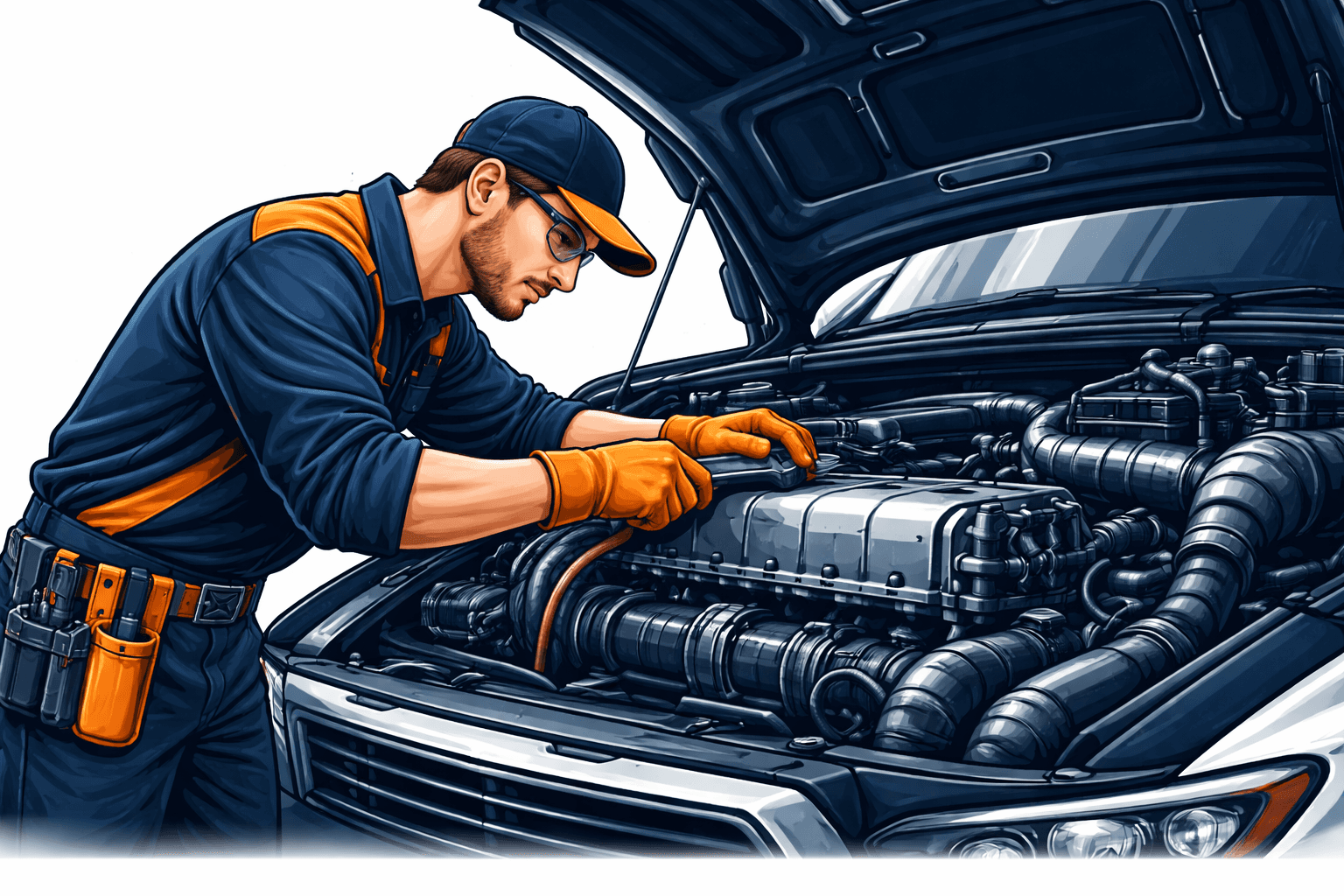
If I had a dollar for every customer who told me "it's just a small leak," I could've retired five years ago. Here's the truth about engine oil leaks: they never fix themselves. They only get worse. And the longer you wait, the more expensive it gets.
I've seen a $200 valve cover gasket job turn into a $4,000 engine replacement because someone kept topping off the oil instead of fixing the leak. That's not a scare tactic - that's what happens when oil gets low enough to starve your bearings. So let's walk through what causes oil leaks, what they cost, and how to know when you need to act fast.
Why Oil Leaks Matter More Than You Think
Your engine has about 4 to 6 quarts of oil circulating through it at any given time. That oil does three critical jobs: it lubricates moving parts so metal doesn't grind on metal, it cools internal components that coolant can't reach, and it carries away microscopic debris that would otherwise score your cylinder walls and bearings.
When you lose oil to a leak, you're losing all three of those protections at once. A quart low? Your engine is working harder and running hotter. Two quarts low? You're accelerating wear on every internal component. Three or more quarts low? You're rolling the dice every time you start that engine.
Beyond engine damage, oil leaks create other problems. Oil dripping onto a hot exhaust manifold is a fire hazard - I've seen it happen. Oil on your serpentine belt causes squealing and slipping. Oil on your catalytic converter creates smoke and can damage it. And oil on your driveway? That's an environmental issue and a slip hazard.
The Most Common Causes of Engine Oil Leaks
Valve Cover Gasket
This is the most common oil leak I see, especially on vehicles over 80,000 miles. The valve cover sits on top of your engine and the gasket between it and the cylinder head dries out, cracks, and starts seeping. You'll usually see oil pooled around the spark plug wells or running down the side of the engine. On a four-cylinder, it's one gasket. On a V6 or V8, you've got two - one for each bank. The good news: this is usually one of the cheaper fixes.
Oil Pan Gasket
The oil pan bolts to the bottom of your engine and holds your oil supply. The gasket between the pan and the engine block takes a beating from heat cycles and road debris. On some vehicles, replacing the oil pan gasket is straightforward. On others - especially all-wheel-drive vehicles or ones where the subframe is in the way - it can be a significant labor job because the engine or subframe may need to be lifted.
Rear Main Seal
This is the one that makes people cry. The rear main seal sits between the engine and the transmission, sealing the back of the crankshaft. When it fails, oil leaks from the bell housing area. The seal itself costs maybe $30. But to get to it, the transmission has to come out. That's 6 to 10 hours of labor depending on your vehicle. On all-wheel-drive trucks and SUVs, it can be even more.
Front Crankshaft Seal (Timing Cover Seal)
The front crank seal sits behind your harmonic balancer or timing cover. When it leaks, oil typically drips from the front-bottom of the engine. On vehicles with timing belts, this seal is often replaced during a timing belt service since you're already in there. On timing chain engines, accessing this seal can vary from moderate to difficult.
Oil Cooler Lines and Housing
Many vehicles have external oil coolers with rubber or metal lines running to them. These lines develop leaks at the fittings or where the rubber deteriorates. Some engines also have oil filter housings with O-rings or gaskets that leak - this is extremely common on certain European vehicles and some modern domestic engines. A leaking oil filter housing gasket can dump oil fast.
Oil Filter and Drain Plug
Sometimes the simplest explanation is the right one. A loose or double-gasketed oil filter, a stripped drain plug, or a missing drain plug washer can cause a steady leak. If your leak started right after an oil change, go back to whoever did it. This should be fixed at no charge.
How to Spot an Oil Leak
Here are the telltale signs that your engine is leaking oil:
- Spots on your driveway or parking spot: Fresh engine oil is amber to dark brown. If you see dark spots where you park, that's likely oil. Put a piece of cardboard under your engine overnight - in the morning you'll see exactly where it's dripping from.
- Burning oil smell: Oil dripping onto hot exhaust components creates a distinctive acrid, burning smell. You might notice it when you stop after highway driving or when sitting at a red light with windows down.
- Blue or gray smoke from under the hood: This is oil hitting the exhaust manifold and burning off. It's different from tailpipe smoke - this comes from the engine bay area.
- Low oil level on your dipstick: If you're checking your oil (and you should be - see our guide on how to check your fluids) and the level keeps dropping between oil changes, oil is going somewhere. It's either leaking out or burning internally.
- Oil light or low oil pressure warning: If this light comes on, stop driving immediately. This means oil pressure has dropped to a dangerous level. Continuing to drive with this light on can destroy your engine in minutes.
Cost Breakdown by Repair Type
| Leak Source | Parts Cost | Labor Cost | Total Typical Range |
|---|---|---|---|
| Valve Cover Gasket (per side) | $20 - $80 | $100 - $350 | $150 - $400 |
| Oil Pan Gasket | $30 - $100 | $200 - $600 | $250 - $700 |
| Rear Main Seal | $25 - $80 | $600 - $1,800 | $650 - $1,900 |
| Front Crankshaft Seal | $15 - $50 | $200 - $700 | $250 - $750 |
| Oil Cooler Lines | $50 - $200 | $100 - $300 | $150 - $500 |
| Oil Filter Housing Gasket | $15 - $60 | $80 - $250 | $100 - $300 |
| Oil Filter / Drain Plug | $5 - $30 | $0 - $50 | $5 - $80 |
These ranges cover most domestic and Asian vehicles. European vehicles - BMW, Audi, Mercedes, Volkswagen - typically run 20-40% higher due to parts cost and additional labor complexity. Luxury and performance vehicles can be higher still.
When It's Urgent vs. When You Can Wait
Fix It Now
- Your oil light is on or flickering
- You can see oil actively dripping (not just seeping) when the engine is running
- You're losing more than a quart every 500 miles
- You smell burning oil while driving
- Oil is dripping onto your exhaust or near any hot components
- Your oil level is more than a quart low on the dipstick
Schedule It Soon (Within a Few Weeks)
- You see a light seep - a wet area on the engine but no active dripping
- You're losing less than half a quart between oil changes
- Small spots on the driveway (nickel-sized or smaller)
- No burning smell and oil level stays in the safe range with occasional top-offs
Even the "can wait" category has a deadline. Every oil leak gets worse over time. A seep becomes a drip. A drip becomes a stream. The gasket or seal that's failing doesn't heal itself. Monitor your oil level weekly and get it fixed before it escalates. For more on understanding when a leak is serious, APEX Tech Nation's diagnostic tool can help you figure out what you're dealing with.
What to Tell Your Mechanic
When you bring your car in for an oil leak, the more information you can give, the faster (and cheaper) the diagnosis. Here's what to tell them:
- Where do you see oil on the ground - front, middle, or rear of the engine?
- When did you first notice it?
- How much oil are you adding between oil changes?
- Did it start after any recent service?
- Do you smell burning oil? When - at idle, highway speed, or after parking?
- What color is the fluid? (Dark brown/black = engine oil, reddish = transmission fluid or power steering fluid)
A good shop will add UV dye to your oil if the leak source isn't obvious, then have you drive it for a few days and come back. They'll use a UV light to trace exactly where the oil is coming from. This is much better than guessing and replacing the wrong gasket - which I've seen happen at shops that don't take the time to diagnose properly. Before you visit any shop, check out our car repair guide to make sure you're prepared.
How to Prevent Oil Leaks
You can't prevent every oil leak - gaskets and seals have a finite lifespan. But you can extend their life:
- Change your oil on schedule: Old, dirty oil is more acidic and breaks down gasket and seal materials faster. Fresh oil with the right additives keeps seals pliable. Check out our oil types and change intervals guide.
- Use the right oil: Using the viscosity and specification your manufacturer calls for matters. Too thin and it finds every weakness in a seal. Too thick and it creates excess pressure.
- Don't skip oil changes: Extended oil change intervals save you $50 now but can cost you thousands later.
- Fix small leaks before they become big ones: A $200 valve cover gasket ignored today becomes a $200 valve cover gasket plus a $400 detail to clean baked-on oil off everything below it.
- Follow your maintenance schedule: Our complete car maintenance schedule covers all the intervals you need to know.