Why You Need a Pre-Purchase Inspection
I have done more pre-purchase inspections than I can count, and I can tell you this: almost every one of them found something the buyer did not know about. Sometimes it is minor - worn brake pads, a leaking valve cover gasket, tires that need to be replaced in six months. Sometimes it is catastrophic - a cracked frame, a transmission that is slipping on purpose only under load, flood damage hidden under new carpet.
A used car is not a new car. You are buying someone else's vehicle with someone else's maintenance habits, someone else's accident history, and sometimes someone else's undisclosed problems. The $100–$200 you spend on a used car inspection before you sign anything is the single best money you will spend in the whole buying process.
Here is the math: the average used car purchase in 2026 is around $28,000. A pre-purchase inspection is less than 1% of that number. If the inspection finds nothing, you buy with confidence. If it finds a $2,000 transmission problem, you either negotiate the price down or you walk away. Either way, you win.
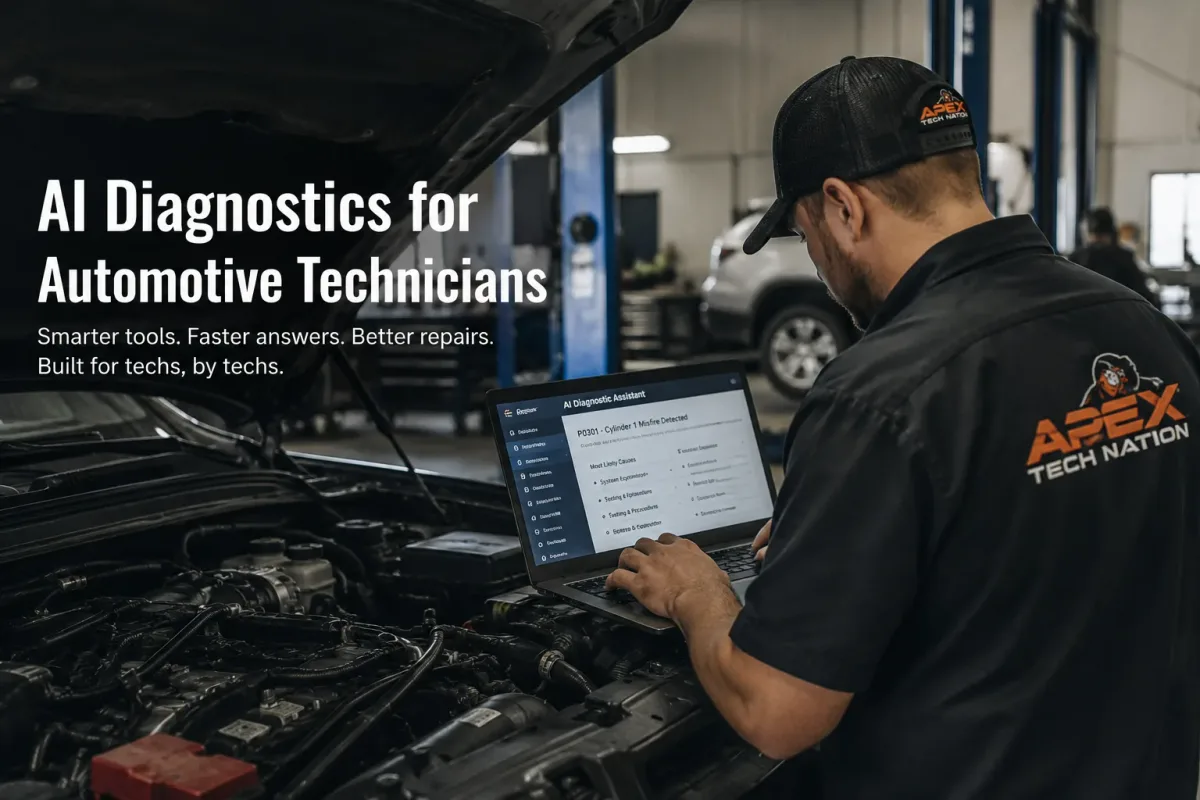
After the physical inspection, the diagnostic tools professional technicians use can help you make sense of any fault codes found during the scan. The professional-grade diagnostic tools at APEX Tech Nation use the same symptom-based approach I use in the bay - worth knowing about if you want to understand what any codes mean before you talk to the seller.
What to Check on the Vehicle History Report
Before you ever see the car in person, run a Carfax or AutoCheck report. It costs around $40 for a single report or $60 for unlimited reports during a set window. Here is what to look at and what to be skeptical about.
What to Look For
- Accident history. How many accidents, how severe (minor fender bender vs. airbag deployment), and what was repaired. An airbag deployment means a significant impact. Look for structural damage notations specifically.
- Number of previous owners. One-owner vehicles are generally lower risk. Three owners in five years is worth asking about. Fleet vehicles (rental cars, corporate fleets) often have high mileage and deferred maintenance.
- Service records. Regular oil changes at consistent intervals is a good sign. Gaps in service history are worth questioning. No records at all means you are flying blind on maintenance.
- Title issues. Salvage title, rebuilt title, lemon law buyback, or branded title are serious flags. A salvage title means the vehicle was declared a total loss by an insurance company. A rebuilt title means it was totaled and repaired - legally, but you need to know this.
- Odometer readings over time. The mileage entries should increase logically over time. Unusual drops or large jumps in mileage are red flags for odometer tampering.
- State registrations. A vehicle that was registered in a flood-prone state (Louisiana, Florida, Texas Gulf Coast) after a major hurricane season is worth extra scrutiny during the physical inspection.
What Carfax Does NOT Tell You
DIY Inspection: Exterior
Before spending money on a professional inspection, do your own walkthrough. You will not catch everything a trained tech catches - but you can catch the obvious problems and decide if the car is even worth paying for a professional inspection.
Do this in daylight, never at night, and never in a dark parking garage. Lighting is everything when you are looking at paint and body work.
Panel Gaps and Alignment
Walk around the entire vehicle and look at the gaps between panels - hood to fender, fender to door, door to door, door to quarter panel. These gaps should be consistent and even. Uneven gaps (wide on one side, tight on the other) are a strong indicator of a prior collision that was not properly repaired, or a replacement panel that was bolted on without proper alignment.
Paint Condition and Matching
Look down the length of each panel from a low angle with the sun hitting it. This will reveal ripples, waviness, or orange peel that indicates body filler (Bondo) beneath. Run your hand along the panels - filler feels different from steel and sometimes you can feel the transition.
Look at the paint color under different light angles. Mismatched paint - even close colors - shows up clearly. A repainted door that is slightly off from the fender tells you a collision happened and a panel was repainted. This is not automatically a dealbreaker, but it should be disclosed.
Rust
Check the wheel arches (inside the fender opening), the rocker panels (the structural section below the doors), the lower door edges, and the frame rails you can see under the car. Surface rust on brake rotors after the car has been sitting is normal and clears up with use. Rust that is eating through the metal - bubbling paint, flaking rust, holes - is a structural concern and depending on location can be very expensive to repair properly.
Glass and Lights
Check all glass for cracks, chips, and stress cracks at the edges. Look at all exterior lights - not just that they exist, but that they are not cracked, moisture-filled (internal condensation inside the lens), or yellowed beyond legal clarity. A headlight full of moisture means the seal is gone and the light housing needs replacement.
Tires
Check tread depth with a quarter - insert it into the tread groove. If you can see the top of Washington's head, you have less than 4/32" of tread left and replacement is coming soon. Also check for uneven wear. Wear on the outer edges of both front tires points to underinflation. Wear in the center points to overinflation. Wear only on the inner or outer edge of one tire is an alignment or suspension problem. Mismatched tires (different brands or sizes front to rear) tell a story about how this car was maintained.
DIY Inspection: Interior
Smell First
Before you look at anything, sit in the car with the windows up for a moment and smell. A musty, mildewy smell that fresheners cannot quite cover is a flood damage indicator. Cigarette smoke smell is nearly impossible to fully remove and will be present in the HVAC system indefinitely. Burning smell can indicate electrical issues. Trust your nose - sellers know to air out a car before a showing, but smells embedded in carpet and seats linger.
Flood Damage Signs
- Staining on carpet, especially a high-water line around the bottom of the seat tracks or door sills
- Rust on seat track bolts or floor pan seams under the carpet edges
- Sand, silt, or debris trapped in seat track grooves
- Carpet that has been replaced or freshly cleaned inconsistently
- Corrosion on electrical connectors under the dash or in the trunk
Seat and Interior Condition
Check all seats for function (power seats should move in all directions smoothly), check seat belts (they should retract freely and the buckle should click and release cleanly), and check all interior trim for broken clips, missing pieces, or panels that are not seated properly. These are usually cosmetic but add up in cost if you want them fixed.
Electronics Check
Test everything: all windows up and down, all door locks, heated seats, heated steering wheel, sunroof, every climate control setting, every input on the infotainment system, every speaker, the backup camera, the USB ports. Do this before you drive it. A non-functioning window motor or dead speaker is a negotiating chip - or a sign of a bigger electrical problem.
Dashboard Warning Lights
When you start the car, all warning lights should illuminate for a few seconds (bulb check) and then go off. Any light that stays on is communicating a problem. Any light that does not come on during the bulb check could have been pulled. Take note of every light that stays on and get those codes pulled during the professional inspection.
DIY Inspection: Under the Hood
You do not need to be a mechanic to check a few things under the hood. With the engine cold (before it has been started that day), check the following.
Oil Level and Condition
Pull the dipstick, wipe it, reinsert, and pull again. The oil level should be between the MIN and MAX marks. The color should be amber to dark brown - black oil is due for a change but not a crisis. Look at what is on the dipstick more than the color. If the oil looks milky, grey, or has a foam-like texture, that is coolant mixing with oil - a head gasket failure or cracked block. Walk away from this car.
Coolant Reservoir
The coolant overflow reservoir is translucent - look at the level without opening it. It should be between MIN and MAX. The coolant should be green, orange, pink, or blue depending on the vehicle - not brown, rusty, or oily. An oily film on top of the coolant is transmission fluid or engine oil in the cooling system, which is a major failure.
Radiator Cap (Only Check When Cold)
If the engine is completely cold, you can carefully remove the radiator cap if there is one separate from the overflow. Check inside - you should see clean coolant, not oily residue or brown sludge. Never open the radiator cap on a warm or hot engine. The system is pressurized and the coolant is scalding.
Belts and Hoses
Squeeze the large radiator hoses - they should feel firm but pliable. Spongy or mushy hoses are deteriorating and could fail. Look at the serpentine belt - it should be smooth on the ribbed side, no cracks, fraying, or glazing on the surface.
Battery Terminals
Look at the battery terminals for heavy corrosion - white, blue-green, or powdery buildup. Some corrosion is normal. A terminal that is completely caked and has caused the cable end to crack or break is a maintenance red flag.
Leaks
Look at the ground where the car has been parked. A small amount of water under the car on a hot day is normal AC condensation. Oil spots, coolant puddles (usually green, orange, or pink), or transmission fluid (reddish) are problems. Look under the hood for evidence of leaks - residue on the oil pan, valve covers, or coolant hoses.
Test Drive Checklist
Never buy a used car without a test drive. Plan to drive it for at least 20–30 minutes, including highway speeds, stop-and-go traffic, and a parking lot or quiet street where you can do low-speed maneuvers.
Cold Start
Start the car cold if possible - before the seller has warmed it up. Cold starts reveal problems that disappear once the engine reaches operating temperature. Listen for knocking, tapping, or rattling on startup. A little valve tick that clears within 30 seconds is common. Hard knocking that persists is engine wear. Blue smoke on cold start can mean valve seal wear. White smoke on cold startup that clears in 30 seconds is usually just condensation - white smoke that persists is coolant burning.
Transmission
For an automatic: shifts should be smooth and positive. Hesitation before engaging, hard clunking shifts, slipping (engine revs go up but the car does not accelerate proportionally), or a delay when you put it in reverse are all transmission red flags. For a manual: the clutch pedal should engage in the upper half of its travel, not right off the floor. Grinding when shifting into any gear means worn synchros.
Brakes
Test brakes on the highway and at low speeds. They should stop the car straight - pulling to one side means a stuck caliper, worn pads on one side, or a brake system problem. Pulsation or vibration through the pedal when braking means warped rotors. Grinding means the pads are metal-on-metal. Squealing under light braking is often brake pad wear indicators telling you they are low.
Steering
On a straight flat road, briefly loosen your grip on the wheel. The car should track straight or drift only very gently. A car that pulls hard needs an alignment at minimum, or has a bent component. Turn the steering wheel from lock to lock slowly in a parking lot - any grinding, popping, or clunking through the steering wheel points to CV joint, steering rack, or tie rod issues.
Engine Performance
Accelerate hard from a stop onto a highway on-ramp. The engine should respond cleanly with no hesitation, stumbling, or misfiring. Check the mirror - no smoke from the exhaust under acceleration. If you see blue smoke when you lift off the throttle after hard acceleration, you have engine oil burning.
Noise and Vibration
At highway speeds, there should be no vibration through the steering wheel (wheel balance issue or bent wheel) and no vibration through the floor (driveshaft or axle problem). Listen for wind noise from door seals, suspension clunking over bumps, and any rhythmic noise that changes with speed.
Underneath the Vehicle
This is the section that separates a real inspection from a quick walkaround. You need to see the underside of the vehicle - either by crawling under it on level ground with a flashlight, or by having a shop put it on a lift.
Frame and Unibody
Look for signs of structural repair - welds that do not match factory welds, kinks in the frame rails, replaced or reinforced sections. On unibody vehicles (most modern cars), look at the frame rails that run front to back under the engine bay - these should be straight with factory seam welds only. Fresh undercoating applied over a large area (especially where it does not match the rest of the undercarriage) can be hiding rust or repair work.
Suspension Components
Look at the control arms, ball joints, tie rods, and sway bar end links. You are looking for cracks, bends, torn rubber boots (especially on CV axles and tie rod ends), and excessive rust that has compromised structural integrity. Some surface rust on steel suspension components is normal. Rust that is pitting deep into the metal or compromising weld joints is not.
Brake Lines and Fuel Lines
On older vehicles especially, look at the steel brake lines and fuel lines running along the frame. These should be intact with no significant corrosion, crimping, or repairs. A brake line that fails while driving is a life-safety event. This is not something to overlook.
Exhaust System
Look at the entire exhaust from the manifold to the tip. Rust through the pipe, a cracked manifold, or a catalytic converter that has been replaced with a straight pipe are all problems. A catalytic converter replacement is common and not alarming. A missing catalytic converter replaced with a pipe is an emissions failure and potentially illegal to operate.
Fluid Leaks
From underneath, you can see leaks more clearly than from above. Look at the oil pan, the transmission pan, the power steering rack, the differential (if applicable), and the axle seals. A seeping gasket that has been present for a while will show old dried residue. An active drip is more urgent.
Red Flags - Walk Away
Some findings during a used car inspection are negotiating points. Others are dealbreakers. Here is the short list of the ones that mean walk away, no matter what the price is.
- Frame damage or structural repair. A vehicle that has had its frame or primary structural components repaired in a collision can never be verified as being as safe as it was originally. The repair may hold - or it may not. This is a non-negotiable dealbreaker for a daily driver.
- Coolant in the oil or oil in the coolant. This is a head gasket failure at minimum, and potentially a cracked block or cracked head. Repair costs start at $1,500 and go up from there. The engine may last a week or two years - you have no way to know. Walk away.
- Salvage or flood title. Unless you are a mechanic buying a project, a salvage or flood-title vehicle is not worth the risk for a daily driver. Insurance is expensive or unavailable, resale value is deeply discounted, and hidden structural or electrical damage can take years to manifest.
- Active transmission slipping. If the transmission slips, shudders, or refuses to engage cleanly under hard acceleration, that transmission is on its way out. Rebuilds start at $2,500. Do the math.
- The seller refuses an independent inspection. A clean car with nothing to hide passes an inspection. The only reason to block an inspection is because the car will not pass one. Any seller - private or dealer - who refuses a pre-purchase inspection is telling you everything you need to know.
- Evidence of rolled-back odometer. This is fraud. If the Carfax mileage history does not line up with the physical wear on the interior, pedals, steering wheel, and seat bolsters, walk away and consider reporting it.
Professional Pre-Purchase Inspection: What It Covers and What It Costs
A DIY inspection gets you far - but there are things only a trained technician with a lift and professional equipment can find. This is why a professional pre purchase inspection is worth the money on any car over $5,000.
What a Professional Used Car Inspection Includes
| System | What the Tech Checks |
|---|---|
| Engine | Oil condition, leaks, compression on request, timing chain/belt condition, cooling system integrity, belt and hose condition, unusual noises |
| Transmission | Fluid condition and level, shift quality, solenoid function, pan for metal debris (dropped pan inspection on request), slipping or engagement issues |
| Brakes | Pad thickness (front and rear), rotor condition and thickness, caliper function, brake line condition, ABS component visual check |
| Suspension | Ball joints, tie rods, control arm bushings, sway bar links, strut/shock condition, wheel bearing play |
| Electrical | OBD-II fault code scan (including pending and history codes), battery load test, charging system output |
| Tires and Wheels | Tread depth, uneven wear patterns, sidewall condition, wheel straightness |
| Undercarriage | Frame, floor pan, exhaust, fuel lines, brake lines, evidence of collision repair, rust assessment |
| Fluids | Coolant condition, power steering fluid, brake fluid moisture content, differential fluid if applicable |
| Exterior | Panel gaps, paint consistency, VIN plate verification, glass condition |
What It Costs
| Inspection Type | Cost Range | What You Get |
|---|---|---|
| Basic visual inspection | $75–$100 | Walk-around, fluid check, basic drive - no lift |
| Standard pre-purchase inspection | $100–$175 | Full inspection on lift, OBD scan, written report |
| Comprehensive inspection | $175–$250 | Full inspection + compression test + fluid analysis |
| Mobile PPI service | $150–$225 | Tech comes to seller location - no lift available |
For most used cars, the standard $100–$175 inspection is the right choice. Spend more for a high-mileage vehicle or any car over $15,000 where a compression test gives you more confidence about engine condition.
Where to Get a Pre-Purchase Inspection
- Independent repair shops. This is your best option. Find a shop with ASE-certified technicians and good reviews. Call ahead and tell them you want a pre-purchase inspection - most shops do them regularly and will schedule you within a day or two.
- AAA-approved auto repair shops. AAA maintains a network of approved shops. Consistent quality and they stand behind their inspections.
- Mobile PPI services. Companies like Lemon Squad and CARFAX Car Inspector send a tech to wherever the car is located. Useful when the seller will not allow the car to leave their location. The limitation is no lift - so undercarriage inspection is done on the ground.
- Not the selling dealer. Never let the selling dealer inspect the car. Their interest is in making the sale, not in finding your problems.
How to Negotiate After Inspection Findings
The pre purchase inspection is done. You have a written report. Now what?
First, understand the difference between normal wear and actual problems. A 2018 vehicle with 80,000 miles will have worn brake pads, aging tires, and maybe a small oil seep. That is normal and already reflected in the price if the listing was honest about mileage. What you are negotiating on is problems the seller did not disclose - things that cost real money to fix.
How to Calculate Your Negotiating Number
- Get the inspection report in writing from the shop - itemized, with their recommended repairs.
- Get a repair cost estimate from the same shop or a comparable local shop for each item.
- Add up the total repair cost for legitimate problems (not normal wear items).
- Present the total to the seller with the documentation.
Your position is simple: "The inspection found $X in repairs needed that were not disclosed. I would like to either have those repairs done before purchase, or have the price reduced by $X." This is not aggressive - it is accurate.
How Sellers Typically Respond
- They agree to fix the issues. Get it in writing and verify the work was done before closing. If it is a dealer, have a shop verify the repairs - not the same service department.
- They offer a partial reduction. That may be reasonable depending on the issue. A $1,200 brake job does not have to come off the price dollar for dollar if the price was already fair for the condition. Negotiate from the documented number.
- They refuse to negotiate. At this point, you decide whether the car at the asking price is still worth it knowing what you now know. On a major find, the answer is usually no. There are other cars.
- They claim the inspection was wrong. Ask for a second inspection if you still want the car. Do not just accept the seller's word over a written report from a credentialed technician.
Frequently Asked Questions
What is a used car pre-purchase inspection?
A pre-purchase inspection (PPI) is when you take a used car to an independent mechanic before buying it. The tech puts it on a lift, checks all the major systems - engine, transmission, brakes, suspension, cooling, electrical - and gives you a written report of what is working, what is worn, and what is about to fail. It costs $100–$200 and can save you thousands.
How much does a pre-purchase inspection cost?
Most independent shops charge $100–$200 for a thorough used car inspection. Some shops charge less for a basic visual check, but you want a full inspection that includes a lift check of the underside, a test drive, and a scan for fault codes. Budget $150 and you will be fine at most reputable shops. That is cheap insurance against a $3,000 surprise.
Will a dealer let me take the car to my own mechanic?
A reputable dealer selling a good car will say yes. A dealer who refuses to let an independent shop inspect the vehicle before purchase is waving a red flag. Private sellers who refuse are doing the same. You can also use a mobile pre-purchase inspection service if the seller will not allow the car to leave. There is no legitimate reason to block an inspection on a sound vehicle.
What does Carfax not tell you about a used car?
Carfax only records what gets reported. Accidents paid out of pocket between private parties may never appear. Flood damage from an area without widespread insurance claims can be missing. Odometer rollbacks done before the car entered the reporting system will not show. Mechanical problems and worn components are never on a Carfax. The vehicle history report is useful, but it is not a substitute for a physical inspection.
What are the biggest red flags on a used car inspection?
Frame damage or evidence of major structural repair, oil in the coolant or coolant in the oil (head gasket failure), active transmission slipping or rough shifting, rust through the floor or frame rails, smoke from the exhaust under acceleration, fresh undercoating over rust, and multiple mismatched paint panels. Any one of these is reason to walk away or dramatically reduce your offer - some of them mean walk away no matter what.
How do I negotiate the price after a used car inspection?
Get the inspection report in writing, then price each problem separately using repair cost estimates from a local shop. Add up the total, present it to the seller as a documented list, and ask for a dollar-for-dollar reduction. You are not trying to squeeze them - you are adjusting the price to reflect the car's actual condition. Sellers who refuse to negotiate after legitimate inspection findings are sellers you should walk away from.
Disclaimer: This guide is for educational purposes only. It is not a substitute for professional automotive inspection and repair. Every vehicle and situation is different. When in doubt, consult a qualified technician. APEX Driver and Anthony Calhoun are not liable for any actions taken based on this content.