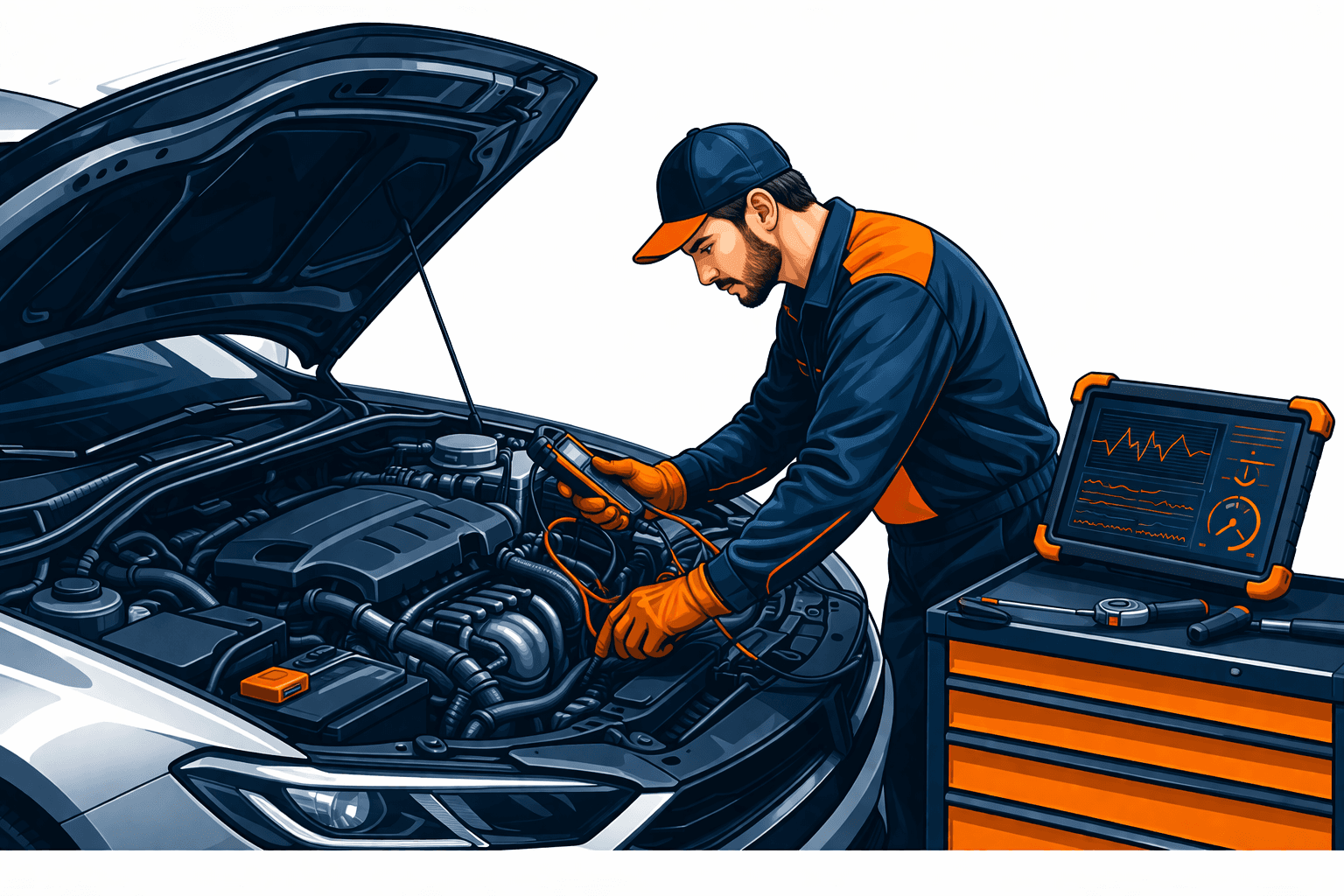
I've seen engines destroyed because someone drove "just a few more miles" with the temperature light on. I've also seen $50 fixes turn into $3,000 repairs because the driver didn't pull over. This light is not a suggestion - it's an emergency.
Here's everything you need to know about the engine temperature warning light: what causes it, what to do the moment you see it, and how to avoid the most expensive mistake car owners make.
What to Do Right Now
If your temperature light just came on while you're driving, do this:
- Turn on the heater to maximum heat and maximum fan. This pulls heat away from the engine through the heater core. It will make the cabin uncomfortable, but it buys you time.
- Pull over safely as soon as possible. Don't slam on the brakes - signal, find a safe spot, and stop.
- Turn off the engine. Let it sit for at least 30 minutes before opening the hood.
- Do NOT open the radiator cap. The cooling system is pressurized when hot. Opening it can spray boiling coolant and cause severe burns.
- Check the coolant overflow reservoir once the engine has cooled. If it's empty, you likely have a leak.
What the Temperature Light Actually Means
Your engine operates best between 195°F and 220°F. The temperature warning light typically triggers around 230-240°F, depending on the manufacturer. At this point, the engine is too hot for the oil and coolant to protect it properly.
Here's what happens when an engine overheats:
- Oil breaks down. Engine oil loses its protective properties above 250°F, which means metal-on-metal contact inside the engine.
- Gaskets fail. The head gasket - the seal between the engine block and cylinder head - can blow, allowing coolant and oil to mix.
- Metal warps. Aluminum cylinder heads expand unevenly under extreme heat. A warped head won't seal properly even after the gasket is replaced.
- The engine can seize. In the worst case, pistons expand enough to lock against the cylinder walls. At that point, you're looking at a new engine.
I diagnosed a 2017 Honda CR-V last year where the owner drove 8 miles with the temperature light on. The head gasket blew and the head warped. The repair bill was $2,800. If they had pulled over immediately, it would have been a $180 thermostat replacement. If you want to understand what's causing your overheating before you get to the shop, APEX Tech Nation's AI diagnostic tool can help you work through the likely causes step by step.
Common Causes of Engine Overheating
Low Coolant
The number one cause. Coolant leaks from hoses, the water pump, the radiator, or the heater core. Sometimes it's as simple as a loose hose clamp. If your overflow reservoir is empty, you almost certainly have a leak somewhere.
Failed Thermostat
The thermostat is a valve that opens at around 195°F to let coolant flow through the radiator. When it sticks closed, coolant can't circulate and the engine overheats quickly. This is one of the cheapest fixes - $150-$300 at most shops.
Broken Water Pump
The water pump circulates coolant through the engine. When the bearing fails or the impeller corrodes, coolant stops flowing. You'll often hear a grinding noise or see coolant leaking from the pump weep hole before full failure.
Radiator Fan Failure
The radiator fan pulls air through the radiator when you're stopped or moving slowly. If the fan motor burns out or the fan relay fails, the engine overheats in traffic but runs fine on the highway where airflow does the job.
Clogged Radiator
Over time, rust and sediment can block the radiator's internal passages, reducing its ability to cool. This is more common on older vehicles or cars where the coolant was never changed.
Blown Head Gasket
A head gasket failure can cause overheating because combustion gases enter the cooling system and create air pockets. Signs include white smoke from the exhaust, milky oil on the dipstick, or bubbling in the coolant reservoir with the engine running.
Can You Keep Driving?
No. I can't say this clearly enough. Every mile you drive with an overheating engine is doing damage. The question isn't whether you're hurting the engine - it's how much.
The only time you should keep moving is if stopping would put you in danger - like on a highway with no shoulder. In that case, turn on the heater full blast, reduce speed, and get to the nearest safe pullover spot. Do not drive to a shop. Do not drive home. Pull over and call for a tow.
What to Do After the Engine Cools
After 30 minutes, open the hood and check:
- Coolant overflow reservoir: Should be between min and max marks. If empty, you have a leak.
- Under the car: Look for puddles. Green, orange, or pink fluid is coolant.
- Radiator hoses: Feel them (when cool). If one is rock hard or collapsed, that's a problem.
- Oil dipstick: If the oil looks milky or has a chocolate-milk color, you may have a blown head gasket.
If the coolant is low, you can add coolant (or plain water in an emergency) and carefully drive to the nearest shop. Watch the temperature gauge closely - if it starts climbing again, pull over immediately.
Repair Costs by Cause
| Cause | Parts | Labor | Total |
|---|---|---|---|
| Coolant top-off (no leak) | $10-$20 | $0 | $10-$20 |
| Radiator hose replacement | $20-$50 | $80-$150 | $100-$200 |
| Thermostat replacement | $30-$60 | $100-$200 | $150-$300 |
| Radiator fan motor | $100-$250 | $100-$200 | $200-$450 |
| Water pump | $100-$250 | $200-$450 | $300-$700 |
| Radiator replacement | $150-$400 | $200-$400 | $400-$900 |
| Head gasket repair | $200-$400 | $1,000-$2,500 | $1,500-$3,000+ |
European and luxury vehicles (BMW, Mercedes, Audi) typically add 30-50% to these costs due to parts pricing and labor complexity.
How to Prevent Overheating
- Check coolant level monthly. It takes 30 seconds. Pop the hood, look at the reservoir.
- Follow the coolant flush schedule. Most manufacturers recommend every 30,000-50,000 miles or 5 years.
- Watch the temperature gauge. If it starts creeping above the halfway mark, something is changing.
- Fix small leaks early. A $20 hose clamp fix today prevents a $3,000 head gasket tomorrow.
- Don't ignore the sweet smell. Coolant has a sweet, maple-syrup-like odor. If you smell it, you have a leak.
Disclaimer: This guide is for educational purposes. Every vehicle and situation is different. When in doubt, consult a qualified technician.