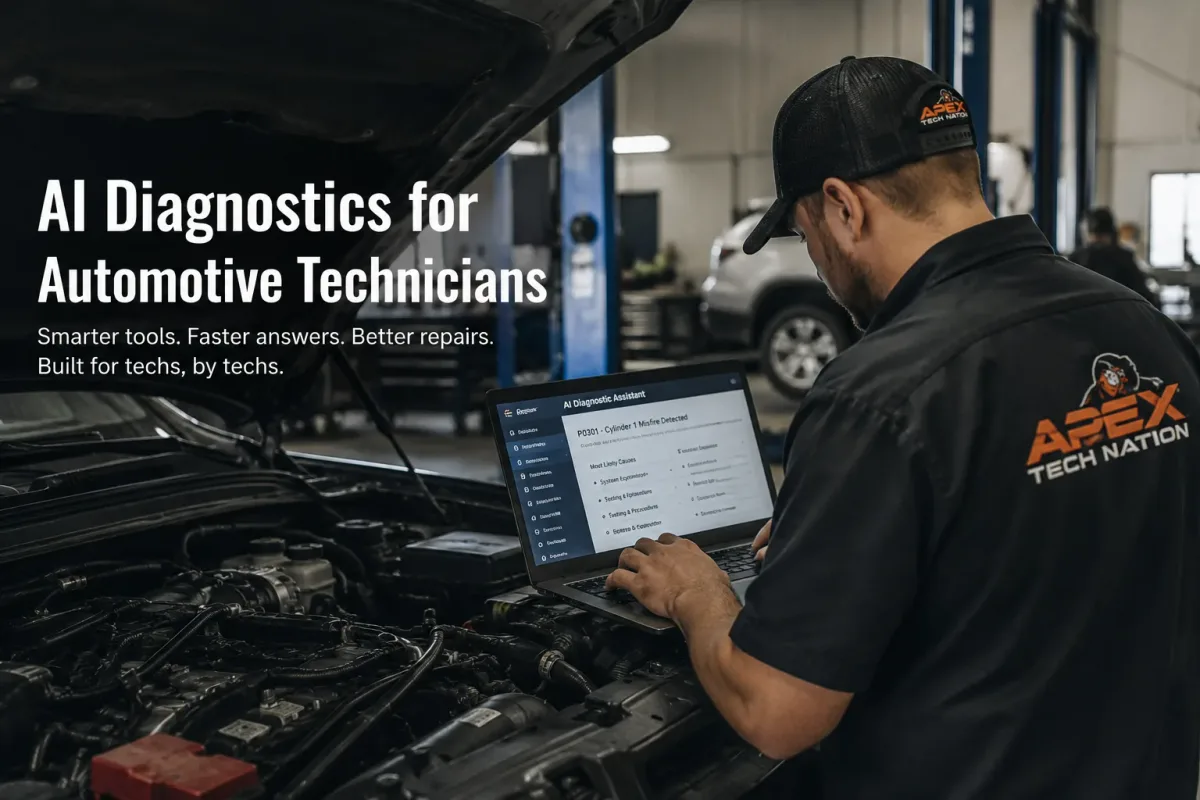
The emissions system light is one of those warnings that can mean a $5 gas cap or a $2,000 catalytic converter. Before you walk into a shop and get hit with a big estimate, let me arm you with the knowledge you need to have an informed conversation about what's going on with your vehicle.
Table of Contents
- What the Emissions System Actually Includes
- The Most Common Emissions Codes
- Check the Gas Cap First
- Catalytic Converter Issues (P0420/P0430)
- Oxygen Sensor Problems
- EVAP System Leaks
- EGR Valve and System
- State Inspection Implications
- Cost Ranges
- Frequently Asked Questions
What the Emissions System Actually Includes
Your car's emissions system is a collection of components designed to reduce harmful exhaust gases. Here's what's in there:
- Catalytic converter: Converts harmful gases (carbon monoxide, hydrocarbons, nitrogen oxides) into less harmful emissions (carbon dioxide, water vapor). This is the big-ticket item.
- Oxygen sensors (O2 sensors): Measure oxygen levels in the exhaust before and after the catalytic converter. The engine computer uses this data to adjust the air-fuel mixture and verify the catalytic converter is working.
- EVAP system: Captures fuel vapors from the gas tank and routes them back into the engine to be burned instead of released into the atmosphere. Includes the charcoal canister, purge valve, vent valve, and a network of hoses.
- EGR valve: Recirculates a small amount of exhaust gas back into the intake to lower combustion temperatures and reduce nitrogen oxide emissions.
- PCV system: Positive Crankcase Ventilation routes blow-by gases from the crankcase back into the intake to be burned.
- Air injection system: Some vehicles pump fresh air into the exhaust to help the catalytic converter heat up faster and work more efficiently during cold starts.
The Most Common Emissions Codes
When you get your car scanned, certain codes come up over and over. Here are the ones I see most:
| Code | Description | Common Cause |
|---|---|---|
| P0420 | Catalyst System Efficiency Below Threshold (Bank 1) | Failing catalytic converter or worn O2 sensor |
| P0430 | Catalyst System Efficiency Below Threshold (Bank 2) | Same as above, other side of the engine |
| P0440 | EVAP System Malfunction | Loose gas cap, leaking EVAP hose, bad purge valve |
| P0442 | EVAP System Small Leak | Gas cap seal, cracked EVAP hose, vent valve |
| P0171 | System Too Lean (Bank 1) | Vacuum leak, weak fuel pump, dirty MAF sensor |
| P0174 | System Too Lean (Bank 2) | Same causes as P0171, other bank |
| P0401 | EGR Insufficient Flow | Clogged EGR valve or passages |
| P0301-P0308 | Cylinder Misfire | Spark plug, ignition coil, injector |
Check the Gas Cap First
I'm going to save you potentially hundreds of dollars with this one piece of advice: check your gas cap before you do anything else.
A loose, damaged, or missing gas cap is one of the most common triggers for an emissions system light. The EVAP system monitors for fuel vapor leaks, and a gas cap that isn't sealing properly looks exactly like a leak to the system.
Here's what to do:
- Remove the gas cap.
- Inspect the rubber seal for cracks, tears, or debris.
- Reinstall it and tighten until it clicks (usually 3-4 clicks).
- Drive for 2-3 days (the system needs several drive cycles to clear the code automatically).
If the light goes off, you just fixed your car for free. If the gas cap seal looks cracked or worn, a new one costs $10-$20. I've seen people pay shops $100 for a diagnostic only to find out it was the gas cap the whole time. Check it first.
Catalytic Converter Issues (P0420/P0430)
P0420 is the code everyone dreads because it usually points to a catalytic converter that's losing efficiency. But here's what I want you to know: P0420 doesn't always mean you need a new catalytic converter.
Sometimes the downstream O2 sensor (the one after the catalytic converter) is giving inaccurate readings, making the computer think the cat is bad when it's actually fine. A bad O2 sensor costs $150-$350 to replace. A catalytic converter costs $800-$2,500 depending on the vehicle.
Before replacing a catalytic converter, a good technician should:
- Verify the O2 sensors are reading accurately.
- Check for exhaust leaks before the converter.
- Test the converter's efficiency with a temperature comparison (inlet vs outlet temp).
- Make sure no other issues (like misfires) are causing the converter to fail prematurely. Replacing the cat without fixing the root cause means the new one will fail too.
Oxygen Sensor Problems
Your car has at least two oxygen sensors, and most V6 and V8 engines have four. They work in pairs: an upstream sensor (before the catalytic converter) that helps control the air-fuel mixture, and a downstream sensor (after the converter) that monitors converter efficiency.
O2 sensors degrade over time. They get contaminated by oil, coolant, or just general exhaust byproducts. A failing O2 sensor causes poor fuel economy, rough idle, and can trigger multiple codes. On most vehicles, O2 sensors should be inspected around 100,000 miles.
Replacement cost: $150-$350 per sensor (parts and labor). Most vehicles have sensors in accessible locations, though some rear O2 sensors on transverse V6 engines are a real pain to reach.
EVAP System Leaks
EVAP codes (P0440, P0442, P0455, P0446) are extremely common and usually not a big deal. The system is looking for fuel vapor leaks, and the tests are very sensitive. Beyond the gas cap, common failure points include:
- Purge valve: Controls the flow of fuel vapors from the charcoal canister to the engine. When it sticks open or closed, you get an EVAP code. Replacement: $100-$250.
- Vent valve: Opens and closes to allow the system to be tested for leaks. Often gets clogged with dirt or spider webs (seriously). Replacement: $100-$200.
- Charcoal canister: Stores fuel vapors. Can become saturated if you top off your gas tank (don't do that). Replacement: $150-$400.
- EVAP hoses: Rubber hoses that connect the components. They crack and leak over time. Usually cheap to replace but can be time-consuming to find.
EGR Valve and System
The EGR valve recirculates exhaust gas back into the intake manifold. Over time, it gets clogged with carbon buildup. P0401 (insufficient EGR flow) is the classic code. The fix is usually cleaning or replacing the EGR valve and cleaning the EGR passages in the intake manifold.
Some vehicles are more prone to EGR problems than others. Diesel engines and direct-injection gas engines tend to have more carbon buildup issues. EGR valve replacement runs $200-$500 typically.
State Inspection Implications
This is where the emissions light goes from "I'll deal with it later" to "I need to fix this now." If you live in a state that requires emissions testing, you will fail inspection with the Check Engine or emissions light on. Period. No exceptions.
But there's more to it:
- Even if you clear the codes right before your test, the car needs to complete its "readiness monitors" (self-tests) before the inspection can pass. This requires normal driving over several trips.
- If any readiness monitors are "not ready," the inspection will be rejected in most states.
- Some states offer waivers if you've spent a minimum amount on repairs (usually $500-$800) and the car still won't pass. Check your state's rules.
Plan ahead. Don't wait until the week before your inspection to deal with an emissions light that's been on for six months.
Cost Ranges
| Repair | Parts Cost | Labor Cost | Total Range |
|---|---|---|---|
| Gas cap replacement | $10-$20 | $0 (DIY) | $10-$20 |
| O2 sensor replacement | $50-$200 | $75-$150 | $150-$350 |
| EVAP purge valve | $40-$100 | $60-$150 | $100-$250 |
| EVAP vent valve | $30-$80 | $60-$120 | $100-$200 |
| Charcoal canister | $80-$250 | $75-$150 | $150-$400 |
| EGR valve | $100-$300 | $100-$200 | $200-$500 |
| Catalytic converter | $500-$2,000 | $200-$500 | $800-$2,500 |
| Diagnostic scan | -- | $75-$150 | $75-$150 |
Before heading to the shop, you can get a better understanding of what your diagnostic code means for your specific vehicle using APEX Tech Nation's diagnostic tool. Going in informed helps you have a better conversation with your technician and understand what's being recommended.
Don't panic over an emissions light, but don't ignore it either. Start with the gas cap. Get a scan. Understand what the code is actually telling you. And if a shop wants to jump straight to replacing the catalytic converter on a P0420 without testing the O2 sensors first, get a second opinion.