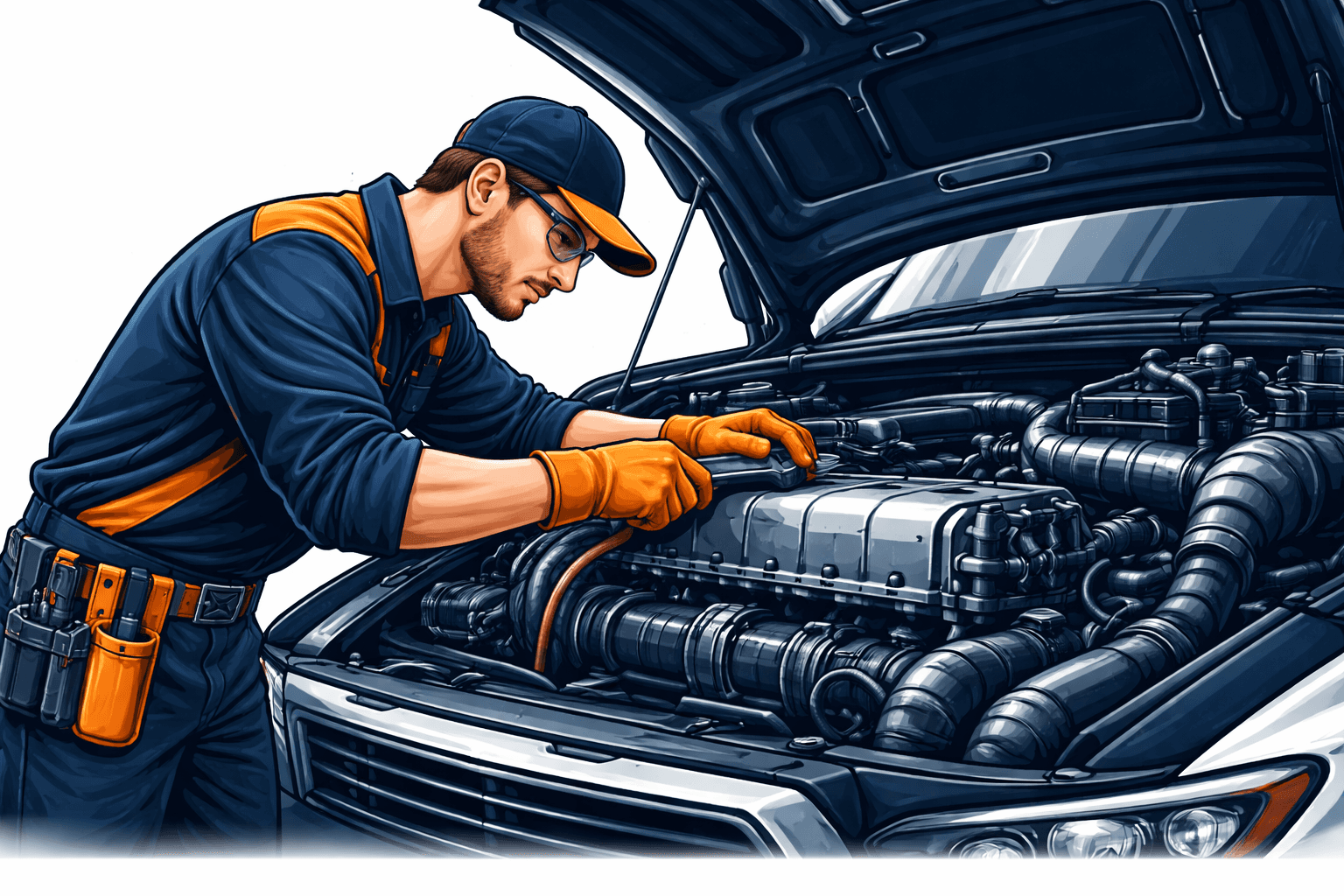
When I started turning wrenches, you still saw carbureted engines rolling into the shop. Those days are long gone. Every modern car on the road uses fuel injectors, and most people have no idea what they are, what they do, or why they matter. Let me break it down for you.
What Fuel Injectors Actually Do
Fuel injectors have one job: deliver the exact right amount of fuel into your engine at exactly the right time. That sounds simple, but the precision involved is incredible. We're talking about injectors opening and closing in milliseconds, spraying fuel in a precisely shaped mist, and doing this thousands of times per minute while you're driving down the road.
Your engine needs a specific ratio of air to fuel to run properly - about 14.7 parts air to 1 part fuel, known as the stoichiometric ratio. Too much fuel (running rich) wastes gas, fouls spark plugs, and increases emissions. Too little fuel (running lean) causes misfires, overheating, and can damage your engine. Fuel injectors are how your engine's computer controls that ratio with pinpoint accuracy.
Before fuel injection, cars used carburetors - mechanical devices that mixed fuel and air using vacuum and venturi principles. They worked, but they were finicky, needed constant adjustment, and couldn't adapt to changing conditions the way electronic fuel injection can. Your fuel injectors adjust their spray duration multiple times per second based on input from oxygen sensors, the mass airflow sensor, throttle position, engine temperature, and more.
How Fuel Injectors Work
A fuel injector is basically a tiny electronically controlled valve with a very precise nozzle. Here's what happens every time one fires:
The fuel rail delivers pressurized fuel. Your fuel pump (located in the gas tank on most modern cars) pressurizes fuel and sends it through the fuel line to the fuel rail - a pipe that feeds all the injectors. Port injection systems run about 40 to 60 PSI of fuel pressure. Direct injection systems run much higher - 2,000 to 3,000+ PSI.
The engine computer sends an electrical pulse. Your car's ECM (engine control module) sends a precisely timed electrical signal to each injector. This signal energizes a small electromagnetic coil (solenoid) inside the injector.
The solenoid opens the valve. When the coil energizes, it pulls a pintle (a small needle valve) off its seat, opening the injector. Pressurized fuel sprays out through tiny holes in the injector tip in a carefully designed spray pattern - usually a cone-shaped mist.
The computer controls how long it stays open. The duration the injector stays open - measured in milliseconds and called "pulse width" - determines how much fuel is delivered. More pulse width means more fuel. At idle, an injector might be open for 2 to 4 milliseconds. Under hard acceleration, it might be open for 10 to 15 milliseconds or more.
The solenoid closes the valve. When the electrical signal stops, a spring pushes the pintle back onto its seat, sealing the injector shut until the next pulse. This open-close cycle happens once per engine revolution for each cylinder (in a sequential injection system), which means at 3,000 RPM, each injector is firing 1,500 times per minute.
The spray pattern matters more than most people realize. A properly functioning injector atomizes fuel into a fine mist that mixes easily with air and burns completely. A dirty or worn injector might dribble, stream, or spray in an uneven pattern - leading to incomplete combustion, wasted fuel, and increased emissions.
Port Injection vs Direct Injection
There are two main types of fuel injection systems on modern cars, and they work quite differently.
Port Injection (PFI/MPI). This is the system that's been around since the late 1980s and is still used in many vehicles today. Port injectors are mounted in the intake manifold, just upstream of the intake valve. When the injector fires, fuel sprays onto the back of the closed intake valve. When the valve opens on the intake stroke, the fuel-air mixture gets drawn into the cylinder.
Advantages of port injection: it's simpler, less expensive to repair, and the fuel washing over the intake valves helps keep them clean. Disadvantages: it's slightly less fuel-efficient than direct injection because the fuel has to travel farther and some sticks to the intake port walls.
Direct Injection (GDI). This is the newer technology that most manufacturers have adopted since the early 2010s. Direct injectors are mounted in the cylinder head and spray fuel directly into the combustion chamber at extremely high pressure - 2,000 to 3,000+ PSI compared to 40 to 60 PSI for port injection.
Advantages of direct injection: better fuel economy (typically 3-5% improvement), more power from the same engine size, and more precise fuel control. The high-pressure spray and direct injection into the cylinder allows for better atomization and more complete combustion.
Disadvantages: direct injectors are more expensive ($150 to $300 each vs $50 to $150 for port injectors), they operate in a harsher environment (exposed to combustion heat and pressure), and because fuel no longer washes over the intake valves, carbon buildup on the valves is a real problem - especially on turbocharged GDI engines. I've pulled intake manifolds on GDI engines with 60,000 miles and found the valves caked with carbon deposits thick enough to restrict airflow.
Dual Injection. Some manufacturers (Toyota and Ford, among others) now use both port and direct injection on the same engine. Port injectors handle light-load situations and keep the valves clean, while direct injectors kick in under heavy load for maximum efficiency. It's the best of both worlds, but it does mean more injectors and more potential failure points.
Symptoms of Bad Fuel Injectors
When fuel injectors start to fail or get too dirty, the symptoms are pretty noticeable. Here's what to watch for:
Rough Idle. If one or more injectors aren't delivering fuel properly, the engine runs unevenly at idle. You'll feel vibrations through the steering wheel or seat that aren't normally there. The engine might fluctuate in RPM - bouncing up and down slightly instead of holding steady.
Misfire. A cylinder that's not getting enough fuel (or getting fuel in a poor spray pattern) will misfire. You'll feel a stumble or hesitation, especially under load. The check engine light will come on, and a scan tool will show misfire codes for the affected cylinder(s). Don't ignore misfires - the unburned fuel going through the exhaust can destroy your catalytic converter.
Poor Fuel Economy. Dirty injectors that drip or have a poor spray pattern waste fuel. If you're suddenly getting 3 to 5 fewer MPG than usual with no change in driving habits, fuel injectors could be the culprit. A leaking injector can also flood a cylinder, washing oil off the cylinder walls and increasing wear.
Hard Starting. Injectors that leak or drip after the engine is shut off can flood the cylinders, making the engine hard to start - especially after sitting for a while. You might notice it cranks longer than usual before firing, or you smell raw fuel when starting.
Check Engine Light. The engine computer monitors injector performance through oxygen sensors and misfire detection. When it sees a problem, it sets codes. Common injector-related codes include P0200 series (injector circuit), P0300 series (misfires), and P0171/P0174 (system running lean).
Fuel Smell. A leaking injector can cause a raw fuel smell from the engine compartment. This is a safety concern - fuel leaking near hot engine components is a fire risk. If you smell gas, get it checked immediately.
If you're experiencing any of these symptoms and want to narrow down the cause before heading to a shop, APEX Tech Nation's diagnostic tools can help you figure out what's going on.
Fuel Injector Cleaning - What Works and What Doesn't
Let me be straight with you about fuel injector cleaning, because there's a lot of misinformation out there.
Fuel additive bottles ($5 to $15). Those bottles of fuel system cleaner you see at the auto parts store? They help with light maintenance. If your injectors are in decent shape, running a quality fuel system cleaner (like Chevron Techron or Gumout Regane) through a tank of gas every 5,000 to 10,000 miles can help prevent deposits from building up. But if your injectors are already dirty enough to cause symptoms, a $5 bottle of additive isn't going to fix the problem.
Professional fuel injection cleaning ($100 to $200). This is where a technician connects a pressurized canister of concentrated cleaning solvent directly to the fuel rail, bypassing the fuel tank and fuel pump. The engine runs on this cleaning solvent for 15 to 30 minutes. This method forces cleaner through the injectors under operating conditions and can remove moderate carbon deposits and varnish. It works well as a maintenance service every 60,000 to 90,000 miles, and it can restore mildly dirty injectors to proper operation.
Ultrasonic injector cleaning ($20 to $50 per injector). For this, the injectors are removed from the engine and placed in an ultrasonic cleaning bath. High-frequency sound waves create tiny bubbles that scrub deposits off the injector inside and out. This is the most thorough cleaning method and includes flow testing each injector to verify it's spraying correctly. If your injectors are severely dirty but not electrically failed, this can save you the cost of replacement.
When cleaning won't help. If an injector has an electrical failure (dead solenoid coil), a cracked body, or internal wear that prevents proper sealing, no amount of cleaning will fix it. Replacement is the only option.
Replacement Cost Breakdown
Here's what you can expect to pay for injector replacement:
Port Injection: Parts run $50 to $150 per injector. For a 4-cylinder engine, a full set is $200 to $600 in parts. Labor is usually $150 to $400, since port injectors are relatively accessible. Total: $350 to $1,000 for a 4-cylinder.
Direct Injection: Parts run $150 to $300 per injector. A full set for a 4-cylinder is $600 to $1,200. Labor is higher because GDI injectors require more disassembly to access. Total: $800 to $1,800 for a 4-cylinder. V6 and V8 engines will be proportionally more.
When I replace injectors, I always recommend replacing the full set. If one injector has failed after 120,000 miles, the others are the same age and have the same wear. Replacing one at a time means you'll likely be paying labor again in a few months when the next one goes. It's cheaper in the long run to do them all at once.
Keeping Your Injectors Healthy
Here's what I tell every customer who wants to get the most life out of their fuel injectors:
Use Top Tier fuel. Top Tier gas stations use higher-than-minimum levels of detergent additives. This is the single best thing you can do for your fuel system. The difference in deposit buildup between Top Tier and non-Top Tier fuel is significant - multiple studies have confirmed this.
Don't run your tank to empty. The fuel pump sits in your gas tank and uses fuel to cool itself. Running the tank low repeatedly can overheat the pump and also stir up sediment that settles at the bottom of the tank. That sediment can get past the fuel filter and clog injectors. Try to refuel when you hit a quarter tank.
Replace your fuel filter on schedule. If your vehicle has a replaceable fuel filter (many modern cars have a lifetime filter built into the fuel pump module), change it per the manufacturer's recommendation - usually every 30,000 to 60,000 miles. A clean fuel filter keeps debris away from your injectors.
Consider professional cleaning at 60,000 to 90,000 miles. Even with good fuel, some deposits are inevitable. A professional cleaning service every 60,000 to 90,000 miles is relatively cheap insurance against injector problems.
Fuel injectors are a marvel of engineering - tiny valves that fire thousands of times per minute, for hundreds of thousands of miles, with millisecond precision. Treat them right with good fuel and basic maintenance, and they'll keep your engine running efficiently for the life of the vehicle.