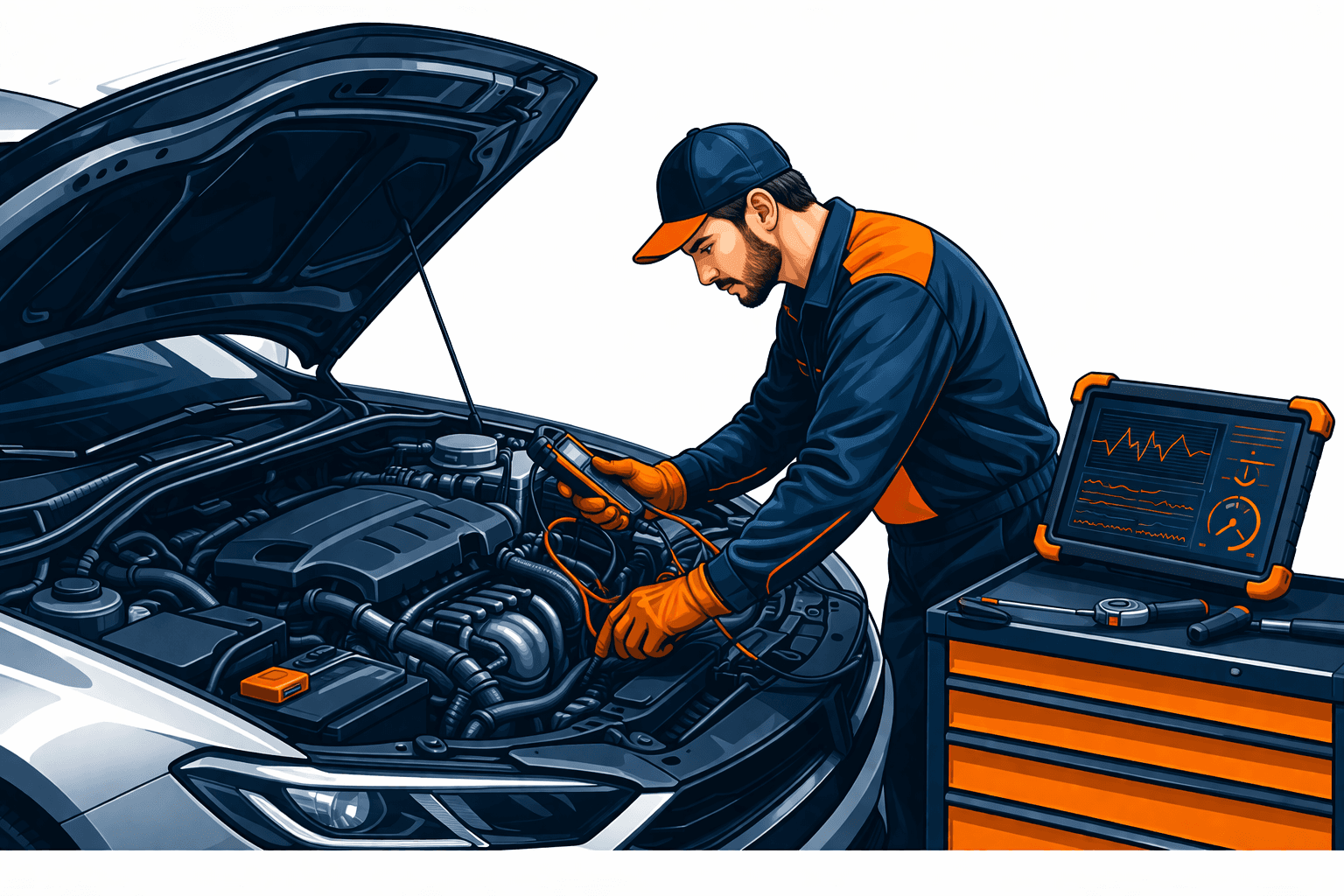
I've pulled fuel pumps out of tanks where the owner routinely ran the car to empty. The pump looked like it had been sandblasted. Fuel pumps are cooled by the gasoline they sit in - when the fuel level drops too low, the pump overheats and its lifespan drops dramatically.
Here's what you need to know about the low fuel light, how far you can actually go, and why making a habit of running on empty is an expensive mistake.
How Far Can You Actually Drive?
When the low fuel light comes on, most vehicles have between 1 and 3 gallons of fuel remaining. Your actual driving range depends on three things:
- How much fuel triggers the light: This varies by manufacturer. A Toyota Camry triggers at about 2.6 gallons remaining. A Ford F-150 triggers at about 3.5 gallons.
- Your fuel economy: A vehicle getting 30 mpg with 2.5 gallons left has about 75 miles. A truck getting 18 mpg with 3 gallons has about 54 miles.
- Driving conditions: City driving with stops and starts uses more fuel per mile than highway cruising. Hills, headwinds, and AC all increase consumption.
As a general rule, most vehicles give you 30-80 miles after the light comes on. But I'd never push past 30 miles. That margin is there for a reason.
Distance by Vehicle (Common Models)
| Vehicle | Fuel at Light | Approx. Range |
|---|---|---|
| Toyota Camry | ~2.6 gal | 65-80 miles |
| Honda Civic | ~1.9 gal | 55-75 miles |
| Toyota RAV4 | ~2.4 gal | 55-70 miles |
| Honda CR-V | ~2.3 gal | 55-70 miles |
| Ford F-150 | ~3.5 gal | 50-70 miles |
| Chevy Silverado | ~3.0 gal | 45-60 miles |
| Nissan Altima | ~2.5 gal | 60-75 miles |
| Hyundai Tucson | ~2.3 gal | 55-65 miles |
| Jeep Wrangler | ~2.8 gal | 40-55 miles |
| Tesla (electric) | N/A | ~20-30 miles at low battery warning |
These are estimates based on average fuel economy. Your actual range may be less in city driving or with a heavy load.
Why Running on Empty Is Bad for Your Car
Fuel Pump Damage
The electric fuel pump sits inside the fuel tank, submerged in gasoline. The fuel cools the pump motor and lubricates its internal components. When the fuel level drops too low, the pump runs hot and dry. Over time, this burns out the pump - and fuel pump replacement costs $400-$800.
Sediment in the Tank
Every fuel tank has some sediment at the bottom - rust particles, dirt, and contaminants that settle over years. When the fuel level is high, the pump draws from above the sediment. When you're running on fumes, the pump sucks from the very bottom and pulls that sediment into the fuel filter and injectors. Understanding how your fuel system actually works can save you from costly mistakes - APEX Tech Nation has the breakdown in plain language.
Catalytic Converter Risk
If the engine sputters and misfires from fuel starvation, unburned fuel enters the exhaust and can overheat the catalytic converter. A catalytic converter replacement costs $1,000-$2,500. Not worth the risk to save a few minutes.
What to Do Right Now
If your low fuel light just came on:
- Don't panic. You have at least 30 miles in most vehicles.
- Find the nearest gas station. Use your phone's navigation to find one.
- Drive smoothly. Avoid hard acceleration. Maintain a steady speed. Highway driving is more efficient than city driving.
- Turn off AC and unnecessary electrical loads. The AC compressor adds load to the engine, increasing fuel consumption.
- Don't speed. Fuel economy drops significantly above 65 mph due to aerodynamic drag.
What to Do If You Run Out of Gas
If you actually run out:
- Pull over safely as far off the road as possible.
- Turn on hazard lights.
- Call roadside assistance (AAA, your insurance, your vehicle's built-in assistance).
- Stay in your vehicle if you're on a highway. Do not walk along the road - it's far more dangerous than you think.
- Most roadside assistance will bring you 1-2 gallons - enough to get to a station.
For diesel vehicles: Running out of diesel fuel is more serious. Diesel fuel systems are self-priming, but modern common-rail systems often need professional bleeding to remove air from the high-pressure system. This can cost $200-$400 for a service call.
Disclaimer: Fuel remaining when the low fuel light activates varies by vehicle. These estimates are approximate. Always refuel as soon as practical when the light comes on.