Cruise control is one of those features you never think about until it stops working. Then suddenly every highway drive feels like a chore. Let's break down what that cruise control light actually means, why it stops working, and whether you need to worry.
Table of Contents
- How Cruise Control Works
- Adaptive Cruise vs Standard Cruise Control
- Common Causes When Cruise Control Stops Working
- When It's Dangerous vs Just Annoying
- Diagnosis and Cost to Fix
- What to Do Right Now
- Frequently Asked Questions
How Cruise Control Works
Standard cruise control is pretty simple. You set your speed, and the car's computer holds the throttle at whatever position keeps you there. It uses your vehicle speed sensor to monitor how fast you're going, and it adjusts the throttle to maintain that speed. Hit the brake or clutch, and the system disengages.
The system involves a few key players: the cruise control module (often built into the main engine computer), the brake light switch (which tells the system you hit the brakes), the speed sensor, and the controls on your steering wheel. If any one of these fails, your cruise control goes down.
Adaptive Cruise vs Standard Cruise Control
Here's where things get more complicated on newer vehicles. Standard cruise control just holds a set speed. Adaptive cruise control (ACC) uses radar or cameras mounted behind your front grille or windshield to detect the car ahead of you. It automatically slows down and speeds up to maintain a safe following distance.
Why does this matter for diagnosis? Because adaptive cruise has way more points of failure. A dirty radar sensor behind your bumper, a misaligned camera behind your windshield, or even a cracked windshield replacement done wrong can knock out adaptive cruise. I've seen customers come in after a windshield replacement wondering why their cruise stopped working. The camera needs to be recalibrated after any windshield work, and that step gets skipped more than you'd think.
Standard cruise control failures are usually electrical: a bad switch, blown fuse, or failing sensor. Adaptive cruise failures can be electrical or related to the radar and camera hardware. The repair costs reflect that difference.
Common Causes When Cruise Control Stops Working
After 25 years, I've narrowed down cruise control failures to a handful of usual suspects:
Brake Light Switch
This is the number one cause I see. The brake light switch sits behind your brake pedal. When you press the brake, it tells the cruise control to disengage. If the switch fails or gets out of adjustment, the car thinks you're always pressing the brake, so cruise won't engage at all. Here's a clue: if your brake lights are stuck on or won't come on at all, the brake switch is probably your problem.
Vehicle Speed Sensor
The cruise control needs to know how fast you're going. If the speed sensor fails, the system has no reference point and shuts down. You'll usually notice your speedometer acting up at the same time. If your speedometer is bouncing or reading zero while you're moving, the speed sensor is a prime suspect.
Blown Fuse
Sometimes it's the simplest thing. A blown fuse in the cruise control circuit will kill the system instantly. Check your owner's manual for the fuse location. It takes two minutes to check and costs about a dollar to replace if that's the problem. Always start here.
Clock Spring
The clock spring is a ribbon cable inside your steering column that maintains electrical connections as you turn the wheel. It connects your steering wheel buttons, including cruise control, to the rest of the car. When a clock spring fails, you might lose cruise control, horn, and airbag functionality all at once. If multiple steering wheel controls stopped working at the same time, the clock spring is almost certainly the culprit.
Cruise Control Module or Body Control Module
On some vehicles, the cruise control logic lives in a separate module. On others, it's handled by the body control module or powertrain control module. Module failures are less common but do happen, especially on vehicles with water intrusion issues or after a jump start gone wrong.
Adaptive Cruise Sensor Issues
For vehicles with adaptive cruise, the radar module behind the front bumper can get blocked by mud, ice, or aftermarket bumper covers. The forward-facing camera can be obstructed or lose calibration. If your dash shows a message like "cruise control unavailable" or "sensor blocked," clean the front of the car first and see if it comes back.
When It's Dangerous vs Just Annoying
Let me be straight with you. Cruise control not working is usually just annoying, not dangerous. You can still drive your car perfectly fine. You just have to use your right foot like people did for decades.
However, there are situations where the underlying cause is a safety concern:
- Brake light switch failure: If the switch that killed your cruise is also preventing your brake lights from working, other drivers can't see when you're stopping. That's a real hazard. Check your brake lights immediately.
- Clock spring failure: If the clock spring is bad, your airbag might not deploy in a crash. The airbag light should be on too. This needs attention soon.
- Speed sensor failure: If your speedometer isn't reading correctly, you don't know how fast you're going. Not great for avoiding tickets or accidents.
- Cruise control won't disengage: This is rare but serious. If you set cruise and it won't turn off when you hit the brake, that's an emergency. Shift to neutral, apply brakes firmly, and pull over. Get it towed.
For most cruise control failures, you're looking at an inconvenience. But the root cause might point to something more serious, so don't ignore it forever.
Diagnosis and Cost to Fix
Here's what you're looking at cost-wise for the most common cruise control repairs:
| Repair | Parts Cost | Labor Cost | Total Range |
|---|---|---|---|
| Blown fuse | $1-$5 | $0 (DIY) | $1-$5 |
| Brake light switch | $15-$50 | $50-$100 | $65-$150 |
| Vehicle speed sensor | $30-$100 | $75-$150 | $105-$250 |
| Clock spring | $50-$200 | $150-$300 | $200-$500 |
| Cruise control module | $100-$400 | $100-$200 | $200-$600 |
| Adaptive cruise radar sensor | $300-$1,000 | $200-$500 | $500-$1,500 |
| ACC camera recalibration | $0 | $150-$400 | $150-$400 |
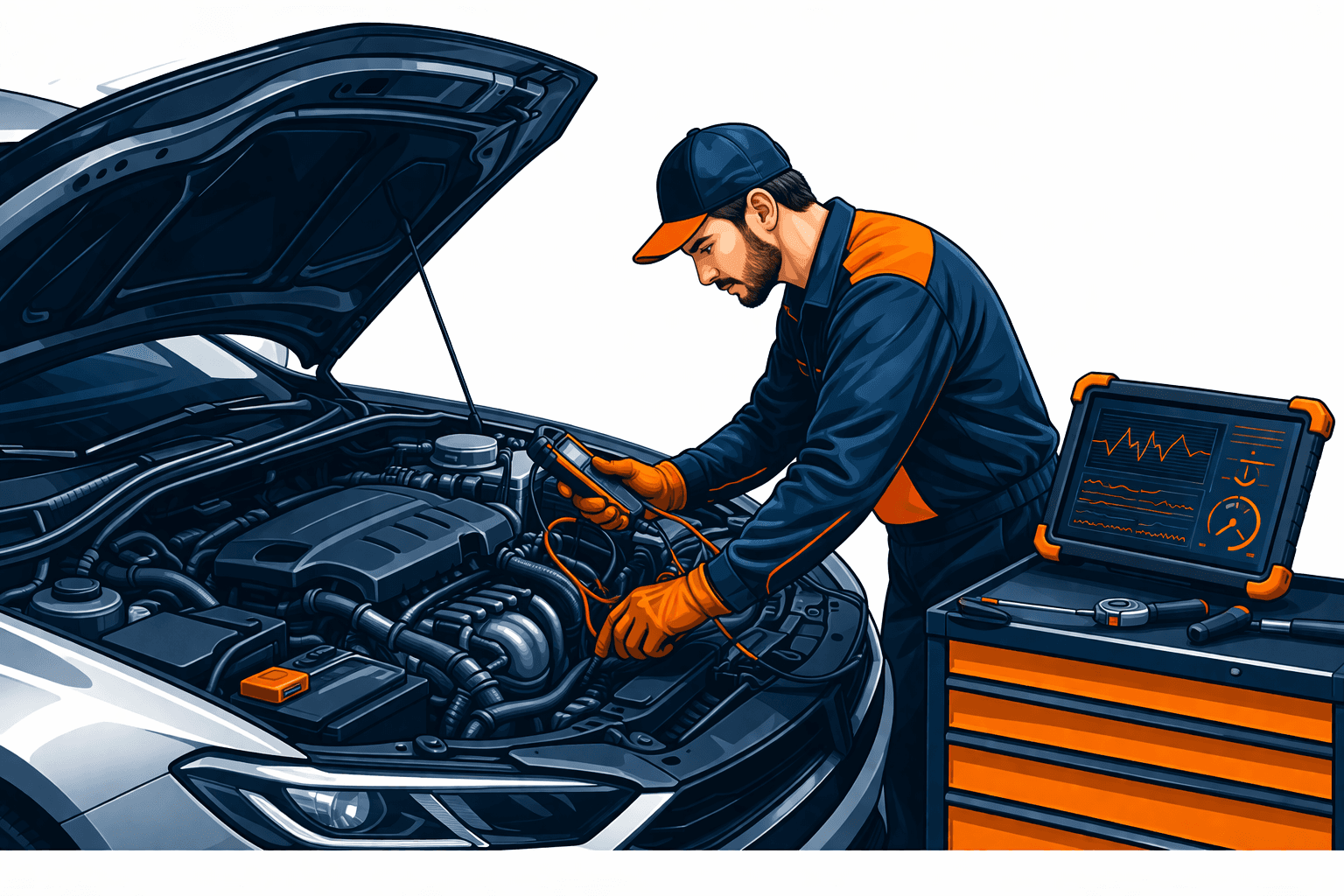
A diagnostic scan can pull trouble codes related to the cruise control system. Most shops charge $75-$150 for a diagnostic session. If you want to get a better understanding of what your specific vehicle might be dealing with, APEX Tech Nation's diagnostic tool can help you narrow down the issue before you head to the shop.
What to Do Right Now
- Check your brake lights. Have someone stand behind the car while you press the brake. If they're not working, that's your priority fix.
- Check the fuse. Find the cruise control fuse in your fuse box and see if it's blown. Replace it if needed.
- Check for other warning lights. If the airbag light is also on, suspect the clock spring.
- Clean adaptive cruise sensors. If you have ACC, clean the front bumper area and windshield camera area.
- Get a scan. If the basics check out, get the car scanned for codes. The computer will usually tell you exactly what's wrong.
Cruise control failure isn't an emergency in most cases, but the root cause can sometimes point to brake or safety system issues. Don't let it sit for months without at least checking the basics.