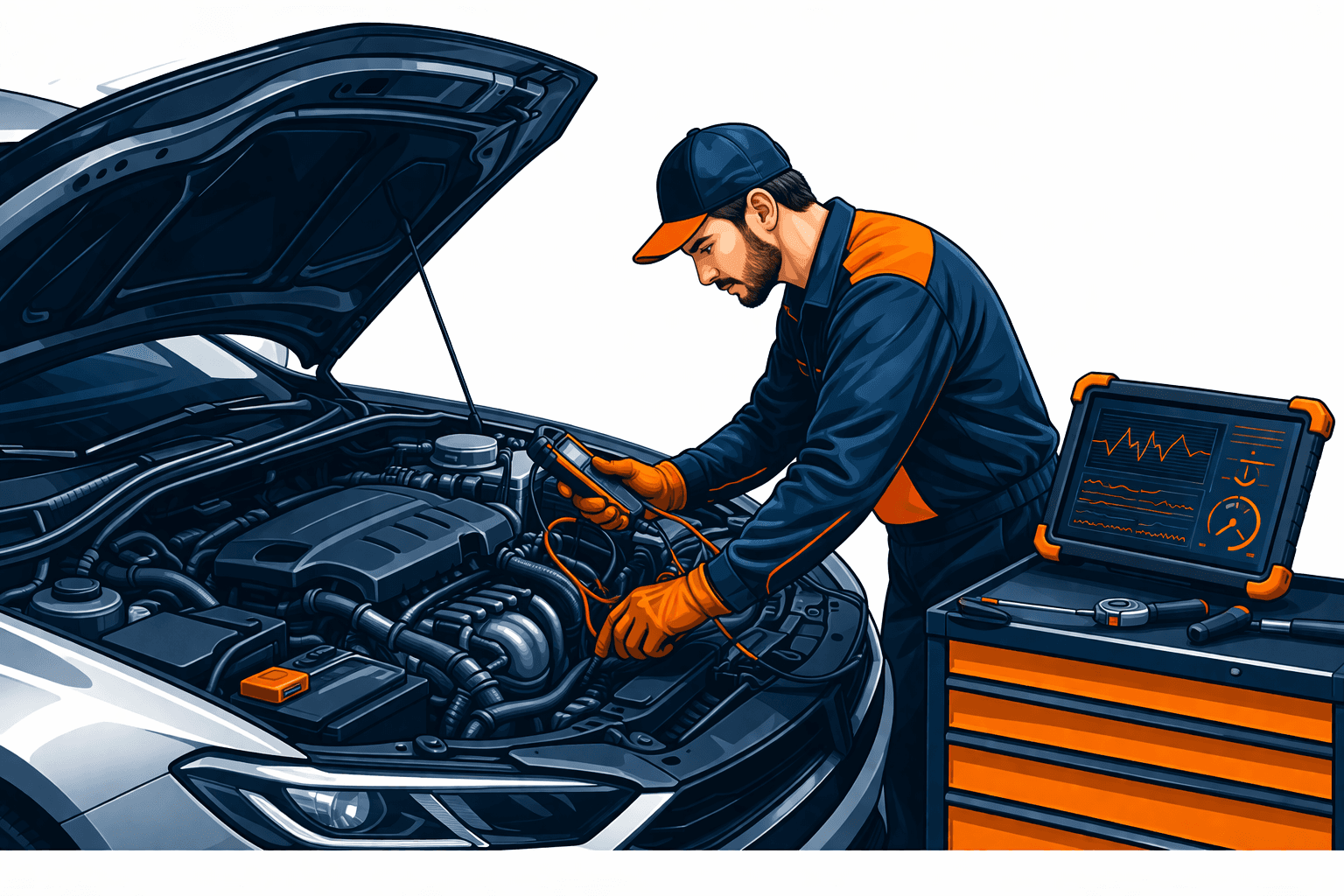
Here's the number one thing people get wrong about the battery light: it's almost never the battery. The battery light monitors the charging system - specifically, whether the alternator is producing the correct voltage. When this light comes on while you're driving, the alternator has stopped charging, and your car is running on whatever charge the battery has left.
That charge won't last long. Here's what's happening and what you need to do.
What's Happening Under the Hood
When your engine is running, the alternator generates electricity to power everything in the car - headlights, fuel pump, ignition system, computer modules, power steering (on EPS vehicles), and more. It also recharges the battery. The battery's main job is just to start the car. Once the engine is running, the alternator takes over.
A healthy charging system runs at 13.5-14.5 volts. When the battery light comes on, voltage has dropped below the threshold - meaning the alternator output has dropped or stopped entirely. Your car is now draining the battery with every mile.
A fully charged battery stores about 48-60 amp-hours of energy. With headlights, the ignition system, and fuel injection running, you're pulling 30-50+ amps. Do the math and you have roughly 30-60 minutes before everything shuts down.
Common Causes
Serpentine Belt
The most common cause I see - and the cheapest fix. The serpentine belt drives the alternator. If the belt breaks, slips, or the tensioner fails, the alternator stops spinning and stops charging. You'll usually hear a squeal before failure, and you may also lose power steering and AC at the same time since they share the same belt.
Alternator Failure
The alternator itself can fail internally. The brushes wear out, the voltage regulator fails, or a diode burns out. When this happens, the alternator either stops producing power entirely or produces inconsistent voltage. Alternators typically last 80,000-150,000 miles.
Wiring and Connections
Corroded battery terminals, a loose alternator connector, or a broken charge wire can interrupt the circuit between the alternator and battery. I once traced a battery light on a 2018 Chevy Equinox to a single corroded ground wire behind the engine - a $2 fix that someone else quoted as a $600 alternator replacement. Before you take your car in, it's worth running your symptoms through APEX Tech Nation's AI diagnostic tool so you have a better idea of what you're actually dealing with.
Faulty Battery (Rarely)
A battery with a dead cell can pull the system voltage down and trigger the light. But this is less common - a bad battery usually shows up as a no-start condition, not a light during driving.
How Long You Have
Once the battery light comes on, you're on a countdown:
| Electrical Load | Estimated Time |
|---|---|
| Minimal (daytime, no AC, no extras) | 45-60 minutes |
| Moderate (headlights, radio) | 25-40 minutes |
| Heavy (headlights, AC, wipers, heated seats) | 15-25 minutes |
These are rough estimates. The actual time depends on battery condition and age, how much charge was in the battery when the alternator failed, and how many systems are drawing power.
What to Do Right Now
- Reduce electrical load immediately. Turn off the AC, radio, heated seats, and rear defroster. If it's daytime, turn off the headlights (but keep daytime running lights if required by law).
- Drive to the nearest shop or safe location. Don't try to make it home if the shop is closer. Every minute counts.
- Do not turn off the engine. Once you turn it off, the battery may not have enough charge to restart it. Keep driving until you reach your destination.
- Watch for other warning signs. If the headlights start dimming, the gauges flicker, or the power steering gets heavy, you're very close to a dead battery. Pull over safely before the engine dies on you.
Repair Costs
| Repair | Cost Range |
|---|---|
| Battery terminal cleaning | $20-$50 |
| Serpentine belt replacement | $100-$250 |
| Belt tensioner replacement | $150-$350 |
| Alternator replacement | $350-$700 |
| Wiring repair | $100-$300 |
European vehicles (BMW, Mercedes, Audi, VW) typically run 30-50% higher on alternator replacement due to parts cost and labor access.
Disclaimer: This guide is for educational purposes. A failing charging system can leave you stranded. Have the system tested by a qualified technician as soon as possible.