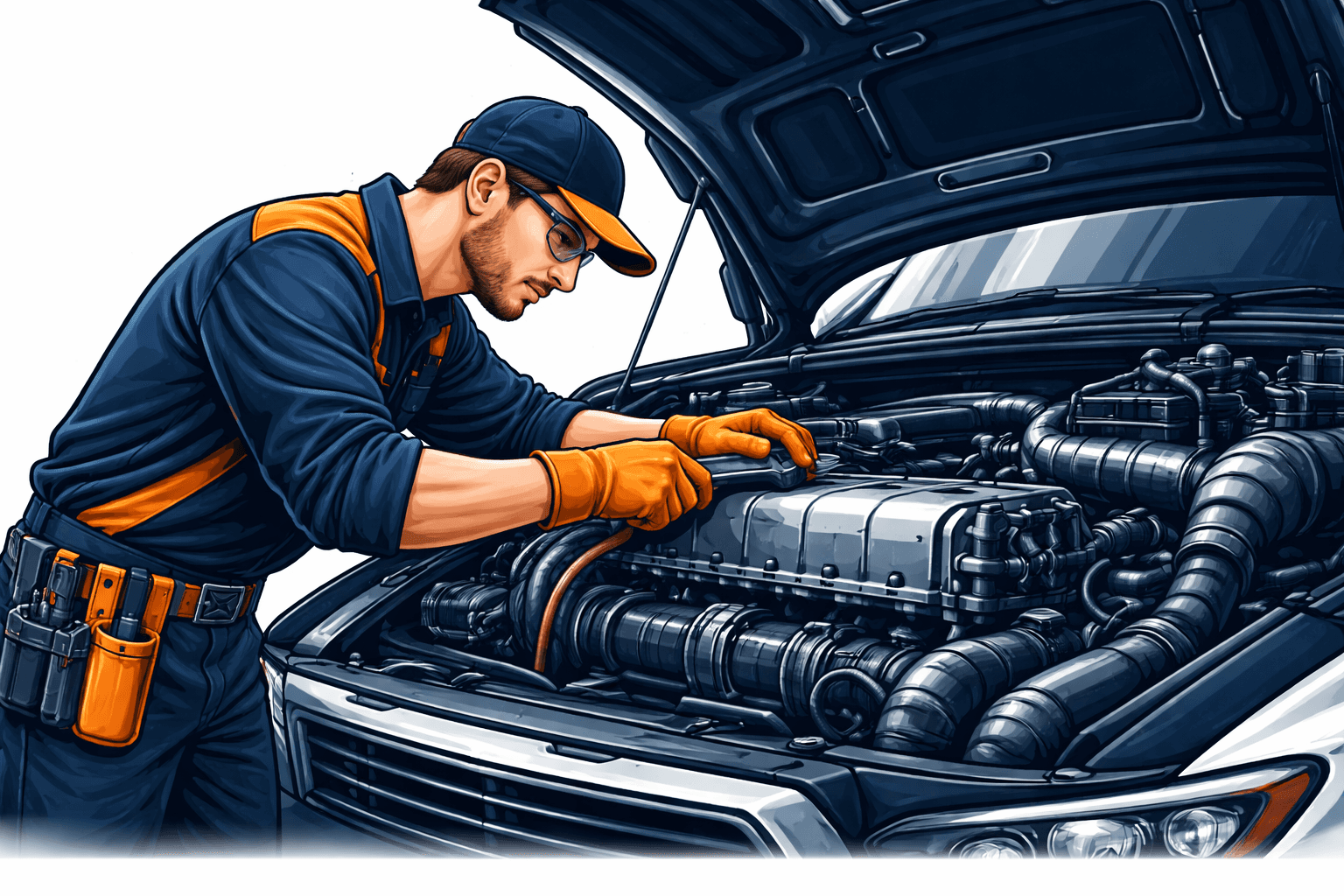
Spark plugs are small, cheap, and easy to forget about. But when they go bad, they affect everything - how your engine starts, how it runs, how much gas you use, and even whether your catalytic converter survives. Let me walk you through what bad spark plugs feel like, what to look for, and what it costs to fix.
Table of Contents
- Bad Spark Plug Symptoms
- What It Actually Feels Like to Drive
- How Long Do Spark Plugs Last?
- What Happens If You Ignore Them
- Replacement Cost
- Can You Replace Them Yourself?
- Frequently Asked Questions
Bad Spark Plug Symptoms
Rough Idle
A healthy engine idles smooth. When a spark plug is failing, you'll feel the engine shaking or vibrating at idle. It might sound uneven too - instead of a steady hum, it stumbles or surges. This happens because one or more cylinders aren't firing consistently.
Engine Misfires
A misfire is when a cylinder fails to fire at all or fires at the wrong time. You'll feel it as a stutter, jerk, or hesitation, especially under acceleration. If the check engine light starts flashing, that's an active misfire and you should address it soon. Continued driving with a misfire can damage your catalytic converter. For more on what that check engine light means, this guide covers it thoroughly.
Poor Fuel Economy
When spark plugs don't fire efficiently, the engine doesn't burn fuel completely. Unburned fuel goes out the exhaust - wasted. If you notice you're filling up more often without a change in driving habits, worn spark plugs could be the reason. The drop in fuel economy can be 10% to 30%, which adds up fast at today's gas prices.
Hard Starting or Slow Cranking
Worn spark plugs need more voltage to fire. In cold weather or when the battery is marginal, this can be the difference between starting on the first crank and struggling. If your car cranks longer than usual before firing, especially on cold mornings, spark plugs are worth checking.
Lack of Power or Sluggish Acceleration
If your car feels like it's lost its pep - it's slower off the line, struggles to merge, or feels sluggish going uphill - worn plugs could be the cause. When plugs can't ignite the fuel properly, you're not getting full power from every cylinder.
Check Engine Light
The most common codes related to spark plugs are P0300 through P0312 (misfire codes). P0300 means random misfires on multiple cylinders. P0301 means cylinder 1 is misfiring, P0302 means cylinder 2, and so on. These codes don't always mean the plug is bad - the ignition coil could be the culprit too - but plugs are the first thing to check if they're overdue.
What It Actually Feels Like to Drive
Let me describe the experience so you can recognize it:
You're sitting at a red light and the steering wheel is vibrating slightly. The engine sounds rough, like it's stumbling. When the light turns green and you press the gas, there's a brief hesitation before the car responds. As you accelerate, you might feel a slight stutter or jerk. On the highway, the car runs a little smoother at steady speed, but the fuel gauge seems to drop faster than usual.
That's a classic worn spark plug scenario. Not dramatic, not scary - just everything running a little worse than it should. The problem builds so gradually that many people don't notice until someone else drives their car and asks, "Is it always this rough?"
How Long Do Spark Plugs Last?
| Spark Plug Type | Expected Life | Cost Per Plug |
|---|---|---|
| Copper (standard) | 20,000-30,000 miles | $2-$5 |
| Platinum (single) | 60,000-100,000 miles | $5-$10 |
| Double Platinum | 80,000-100,000 miles | $8-$15 |
| Iridium | 80,000-120,000 miles | $8-$20 |
Most modern cars use platinum or iridium plugs, so you're looking at replacement around 60,000 to 100,000 miles. Check your owner's manual for your specific interval. Don't skip this service - it's cheap compared to the damage that worn plugs can cause downstream.
What Happens If You Ignore Them
Here's the snowball effect I see in the shop all the time:
- Spark plugs wear out and start misfiring occasionally.
- Unburned fuel enters the exhaust and overheats the catalytic converter.
- The catalytic converter gets damaged from the heat and raw fuel. Replacement cost: $1,000 to $2,500.
- Meanwhile, the misfire creates additional stress on the ignition coils, which can fail prematurely. Replacement cost: $80 to $250 per coil.
- Fuel economy drops 10-30%, costing you hundreds in wasted gas over time.
A spark plug replacement costs $95 to $300. Ignoring it can snowball into $1,500 to $3,000+ in related damage. This is one of the clearest examples of why preventive maintenance pays for itself. This maintenance schedule guide can help you stay on top of things like this.
Replacement Cost
| Vehicle Type | Parts | Labor | Total |
|---|---|---|---|
| 4-cylinder (easy access) | $16-$60 | $50-$100 | $65-$160 |
| 4-cylinder (harder access) | $16-$60 | $100-$200 | $115-$260 |
| V6 | $30-$100 | $100-$250 | $130-$350 |
| V8 | $40-$120 | $100-$250 | $140-$370 |
The big cost variable is access. On some cars, the spark plugs are right on top and easy to reach. On others (looking at you, certain V6 engines), the intake manifold has to come off to access the rear bank of plugs, which adds labor time. For more on understanding service pricing, Anthony's book Your Dealership Service Advantage breaks down how shops price repairs.
Can You Replace Them Yourself?
On some vehicles, absolutely. If the plugs are easily accessible (most 4-cylinder engines with plugs on top), it's a straightforward job with basic tools: a ratchet, spark plug socket, and a torque wrench. YouTube has tutorials for almost every specific vehicle.
On other vehicles, I'd leave it to a shop. If the intake manifold needs to come off or if the plugs are buried deep in the cylinder head (like many Hemi V8s), the risk of breaking a plug in the head or damaging components makes it worth paying a professional.
One critical tip: use anti-seize on the threads (unless the manufacturer says not to) and torque the plugs to spec. Over-tightening can strip the threads in the aluminum head. Under-tightening can cause them to blow out. A torque wrench is not optional here.
Frequently Asked Questions
Can bad spark plugs cause my car not to start?
It's possible but uncommon. All spark plugs would need to fail simultaneously for the car not to start at all. What's more likely is hard starting - the car cranks longer than usual before firing. If your car won't start at all, the battery, starter, or fuel system are more likely culprits.
Should I replace all spark plugs at once?
Yes. Even if only one is visibly worn, they all have the same mileage on them. Replacing all of them ensures even performance across all cylinders. The parts cost difference between replacing one and replacing all is minimal compared to the labor.
Can I just clean spark plugs instead of replacing them?
On modern iridium or platinum plugs, no. The precious metal tip wears down and cleaning won't restore it. On older copper plugs, cleaning and re-gapping was common, but they're so cheap that replacement makes more sense.
What's the difference between iridium and platinum spark plugs?
Iridium is harder than platinum, so iridium plugs last longer and provide a more focused spark. They cost a few dollars more per plug. For most drivers, iridium is the better value because the longer life offsets the higher price. Always use the type specified by your vehicle manufacturer.
Can bad spark plugs damage my engine?
The plugs themselves won't damage the engine, but the misfires they cause can. Misfires send unburned fuel into the exhaust, which can overheat and destroy the catalytic converter. Severe misfires can also wash the cylinder walls with raw fuel, diluting the oil film and causing accelerated wear.